If you ask the average fan what an NFL player does in the offseason, they’ll say, "They go on vacation." If you ask an NFL strength coach, they’ll tell you something very different: "They’re rebuilding the chassis."
I spent nine years in weight rooms from the SEC to the pro level. I’ve seen the "vacation" phase, but it usually lasts about three weeks. After that, the reality of the business kicks in. In the NFL, the offseason isn't about rest—it’s about maintenance, addressing mechanical failures, and preparing the nervous system for another grueling season of travel and contact.
The biggest shift I’ve seen in the last decade? It’s not just about squatting more or sprinting faster. It’s about how these guys manage their physiology when they aren't under the thumb of a team staffer. Let’s cut through the marketing fluff and look at what’s actually moving the needle.
The Data Trap: Wearables and Biometric Monitoring
If I had a nickel for every time a supplement company tried to sell me on a "performance-enhancing" wearable, I’d be retired on a beach somewhere. Here is the truth: Wearable performance technology is only as good as the person reading the data.
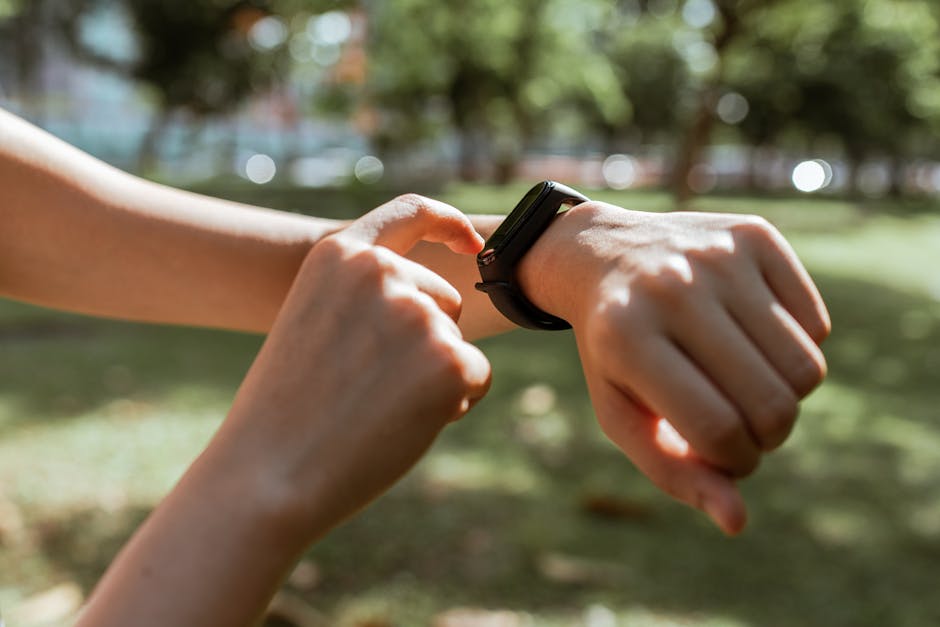
Most players are now using rings, watches, and chest straps to track biometrics. But during the offseason, the focus shifts from "how hard did I work today" to "how well did I recover yesterday."
Biometric monitoring, specifically Heart Rate Variability (HRV) and Resting Heart Rate (RHR), has become the gold standard for gauging CNS (Central Nervous System) fatigue. If a player’s HRV is tanking, they don’t need an expensive IV drip or a $10,000 hyperbaric chamber. They need a scheduled deload week. That’s the real-world application. It’s not about checking a score on an app; it’s about adjusting the training load to match what the body can actually handle.
What Actually Matters?
- Consistency over intensity: Tracking data daily is useful; obsessing over daily fluctuations is a waste of mental energy. Trend analysis: Look at your numbers over a 14-day rolling average. That tells a story; a single morning’s reading is just noise. Actionability: If your biometric data says you’re trashed, you have to be disciplined enough to pull the plug on a high-intensity session. That’s the pro difference.
Mobility Correction: Fixing the "In-Season" Damage
Seventeen weeks of NFL football—plus preseason and playoffs—will destroy your biomechanics. You aren't moving the same way in January as you were in July. That’s why mobility correction is the core of any serious offseason wellness NFL plan.
Players aren't just "stretching." That’s outdated. They are working with biomechanists and physical therapists to identify asymmetrical imbalances caused by specific positional demands. A linebacker’s hips have a different "wear pattern" than a wide receiver’s ankles.
The goal is to restore full joint range of motion (ROM) before adding load back onto the body. If you load a dysfunctional movement pattern, you get an injury. It’s that simple. In the offseason, you are effectively "re-aligning the wheels" before you try to drive the car at 100 mph again.
Sleep Optimization: The Ultimate Performance Enhancer
I’m going to be blunt: If you’re spending thousands on recovery tools but sleeping five hours a night, you’re throwing your money away. Sleep is the only performance enhancer that actually works.
NFL schedules are brutal. Travel creates a permanent state of circadian misalignment. In the offseason, the priority is "sleep hygiene." This means controlling the temperature of the bedroom, blocking blue light, and establishing a non-negotiable bedtime.
Many high-level players now use tools like cooling mattresses or tracking apps that measure deep sleep and REM cycles. Why? Because that’s where the tissue repair happens. If you’re a pro, and your deep sleep is low, your muscles don’t recover, and your neural recovery—the ability of your brain to fire signals to your muscles—is compromised.
Tool/Metric Marketing Hype The Reality Compression Boots "Flushes toxins, guarantees recovery." Feels good, improves circulation, but won't fix poor sleep. HRV Tracking "Tells you exactly how hard to train." Great for identifying overtraining; useless if you ignore the data. Cold Plunges "The secret to instant recovery." Effective for pain management and mental toughness; blunts hypertrophy if done immediately after lifting.Mental Performance and Stress Management
We need to stop treating mental performance like it’s just "meditation." In the NFL, mental performance is about managing cognitive load. The offseason is often more stressful than the season because of contract negotiations, travel, and the sudden shift from a highly structured routine to a self-directed one.
The best players I’ve worked with use breathwork not as a "wellness" trend, but as a physiological reset button. By controlling the breath, you hack the autonomic nervous system to shift from a sympathetic state (fight or flight) to a parasympathetic state (rest and digest).
When you’re dealing with the stress of the business, your body doesn't know the difference between a looming deadline and a pass-rusher coming at you. Learning to regulate that stress response is a skill. It’s an essential part of offseason wellness that most casual observers overlook.
The "Real Life" Constraint
Everything in sports science sounds great on a whiteboard. But here is the constraint: Players have lives. They have families, charity events, and endorsement obligations.
The most successful athletes aren't the ones who build a lifestyle around their recovery tools. They are the ones who integrate these tools into a busy, unpredictable life. If you can't get to a facility for a cold plunge, you take a cold shower. If you can't get eight hours of perfect sleep, you prioritize a 20-minute non-sleep deep rest (NSDR) session in the afternoon.
Injury prevention offseason plans should be boring. They should be repeatable. If your routine is too complicated, you won't stick to draftcountdown.com it. And if you don't stick to it, the best technology in the world won't save you when training camp starts.
Summary of the Modern Approach:
Assess: Use biometrics to find the baseline. Correct: Prioritize mobility and movement patterns over heavy lifting in the early weeks. Recover: View sleep as the foundation, not an afterthought. Manage: Keep the mental load balanced to avoid burnout before the season even begins.If there’s one thing to take away from how NFL players handle the offseason, it’s this: Stop looking for the "magic bullet." There is no recovery device, supplement, or app that replaces the fundamentals of disciplined sleep, intentional movement, and stress management. Be consistent, be skeptical of marketing, and focus on the data that actually impacts your ability to perform on game day.